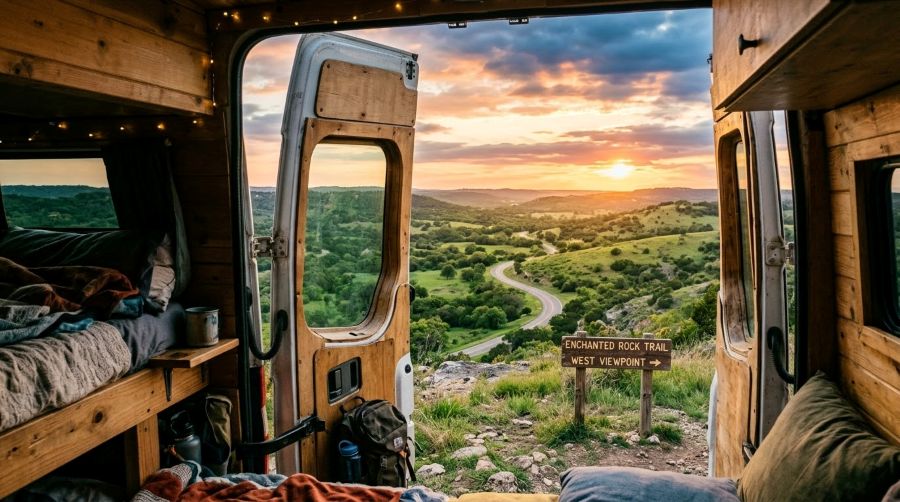
Gemini Generated Photo
Where to park, camp, and work as a digital nomad.
Texas looks perfect for van life on paper. Huge open roads, mild winters, and a coastline, desert, and Hill Country all in one state. Then reality hits. You need a legal place to sleep, a signal strong enough for a 9 a.m. call, and a plan for 105-degree afternoons.
Good news: it all works once you know where to go. Here is how to park, camp, and work your way across Texas in a van.
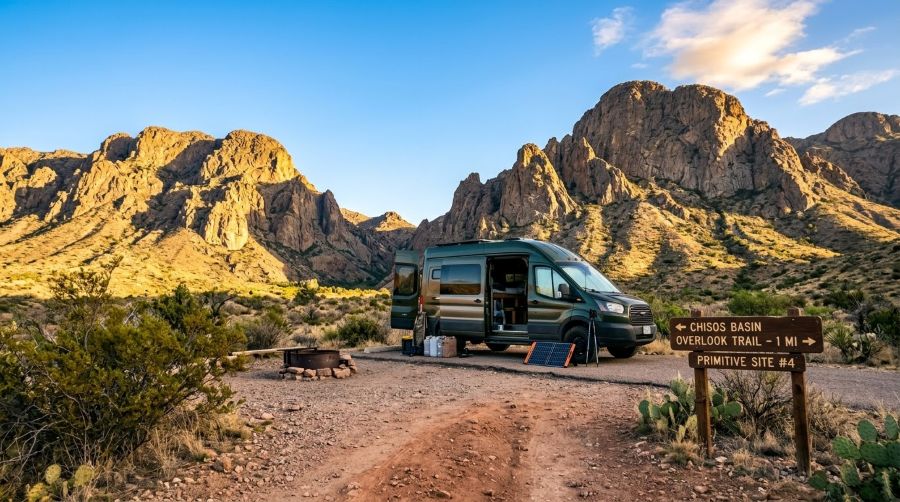
Van Life in Texas: Where to Park Overnight in Texas
Finding a legal place to sleep is the first question every new van lifer asks. Texas offers more options than you might think, but each has its own rules.
Safety rest areas are a solid backup on long drives. According to the Texas Department of Transportation, travelers can stay at state rest areas for up to 24 hours. Newer facilities also include wireless internet, which helps if you need to check email before bed. Treat them as places to sleep, not campsites. Keep chairs and grills inside.
City streets are not the same. For example, Austin reinstated a ban on public camping in 2021, and other cities enforce their ordinances. Stealth camping in neighborhoods often ends with a knock on the window at 2 a.m.
Big-box parking lots have different policies. Some Walmart and Cracker Barrel locations allow overnight stays, while others ban it because of local rules. Always ask the manager and check for signs.
| Option | Typical Cost | Max Stay | Best For |
| TxDOT safety rest areas | Free | 24 hours | Long highway drives |
| Texas state parks | Paid nightly fee + entry | Varies by park | Hookups, showers, scenery |
| National park campgrounds | Paid nightly fee | Varies by park | Big Bend, Guadalupe Mountains |
| Harvest Hosts / Boondockers Welcome | Membership fee | Usually 1 night | Wineries, farms, private land |
| Private RV parks | Paid nightly or monthly | Flexible | Long stays near cities |
| Store parking lots | Free | One night, if allowed | Emergencies only |
For longer stays near a city, a monthly rate at an RV park often beats bouncing between free spots. You get reliable power, laundry, and a fixed address for packages.
Setting Up Your Van to Work on the Road
Before you chase sunsets in Big Bend, your van has to function as an office. Most digital nomads underestimate this part, and it’s why many give up after a few months.
Start close to home. Short trips let you test your setup before you commit to long stretches. A weekend close to home is a low-stakes way to see whether your battery lasts through a full workday or your desk actually fits your laptop.
Power and climate control are Texas’s biggest concerns. A van that cannot stay cool without the engine running is not a workspace from May through September. That is why many builders now design mobile office vans around lithium battery banks, solar panels and DC-powered air conditioning that runs with the engine off. Satellite internet and 5G routers handle connectivity.
Here is what a working van should have before you hit the road:
- Power: A lithium battery bank sized for your laptop, monitor, router and fridge for at least one full day, plus solar or alternator charging
- Cooling: Insulation and engine-off air conditioning, not just a roof fan
- Internet: A cell router with a data plan from two carriers or satellite internet like Starlink for remote areas
- Workspace: A fixed desk at a proper height and a seat with back support
- Privacy: Window covers and some sound dampening for video calls
- Backup: A list of libraries and coffee shops on your route when the tech fails
Get these right, and the rest of the trip gets easier.
Why Texas Works for Van Life and Remote Work
Texas is big enough to give you real variety without crossing a state line. Spend a week on the Gulf Coast, drive west to the Chihuahuan Desert, then loop back through the Hill Country for wineries and swimming holes.
The cost of living helps too. Fuel prices in Texas usually run below the national average, and there is no state income tax. For remote workers watching every dollar, that adds up fast.
The bigger draw is the mix of connected cities and remote countryside. Austin, San Antonio, Dallas, and Houston offer fast Wi-Fi, coworking spaces, and every service you might need. A few hours out, you get dark skies, quiet campsites and almost nobody around.
That mix is also the challenge. Texas has far less public land than western states, so free dispersed camping is rare. Most of your nights will be at paid campgrounds, state parks, rest areas, or private host sites. Planning ahead is part of the lifestyle here.

Best Places to Camp in a Van in Texas
Once you leave the city, Texas offers some of the country’s most memorable campsites. These are the spots worth building a route around.
Big Bend National Park
Big Bend is the classic Texas van trip. Beyond the developed campgrounds, the National Park Service manages 41 primitive roadside campsites along roads like River Road and Old Ore Road. Many require a high-clearance or four-wheel-drive vehicle, so check before you take a heavy van down a dirt road.
Spend your days on the trails. Our guide to scenic hikes in Big Bend National Park covers routes from easy strolls to tough summit climbs. Keep in mind that cell service inside the park is very limited. Plan Big Bend as an offline week, or bring satellite internet.
Padre Island National Seashore
If you want to fall asleep to waves, head to the coast. At Padre Island National Seashore, beach camping on North Beach, South Beach and Yarborough Pass does not require a permit, though entrance fees still apply. The park’s camping rules cap stays at 14 consecutive nights. Watch the sand conditions, and avoid driving deep down South Beach without 4WD.
Hill Country State Parks
Garner, Pedernales Falls and Inks Lake State Parks offer river access, clean facilities and quick drives to towns with good coffee and fast Wi-Fi. According to Texas Parks and Wildlife, you can reserve most overnight camping up to five months in advance, and popular parks fill quickly on weekends from spring through fall. Book early or plan weekday stays. You may even enjoy river camping, too.
Other Spots Worth Adding:
- Guadalupe Mountains National Park: Pine Springs Campground sits below Texas’s highest peak and works well paired with a Carlsbad Caverns detour
- Caddo Lake State Park: Cypress swamps and Spanish moss in East Texas, with a very different feel from the desert
- Palo Duro Canyon State Park: The second-largest canyon in the country, just south of Amarillo
- Lost Maples State Natural Area: A favorite in late fall when the maples turn red
Where to Work: Wi-Fi and Cell Coverage Across Texas
The best campsite in the world is useless if you cannot get online for a client call. Cell coverage across Texas ranges from excellent in metro areas to nonexistent in the far west.
A simple rule works for most digital nomads: schedule calls and heavy upload days near cities, and save remote stretches for weekends or light workdays. Carrier coverage maps are a good starting point, but apps like Campendium and iOverlander include real camper reports on signal at specific sites.
| Region | Cell Coverage | Work Options | Notes |
| Austin / San Antonio | Strong | Coworking, cafes, libraries | Best base for a full work week |
| Dallas-Fort Worth | Strong | Coworking, libraries | Good for long-term RV park stays |
| Houston / Galveston | Strong in metro | Cafes, coworking | Humid; plan for hurricane season |
| Hill Country towns | Moderate | Cafes, small libraries | Signal drops in river valleys |
| Gulf Coast beaches | Moderate to weak | Limited | Satellite internet helps a lot |
| Big Bend / far West Texas | Weak to none | Almost none | Treat as offline time |
Public libraries are underrated for remote workers. Most offer free Wi-Fi, quiet rooms, and power outlets, and you will find them in nearly every Texas town. Coworking day passes in Austin or Dallas are worth the cost on days when you need a stable connection for hours.
Planning Your Texas Van Route by Season
Timing matters more in Texas than almost anywhere else. The right season makes the difference between a great trip and a miserable one.
Fall and spring are the sweet spots. Temperatures are mild, Big Bend is at its best, and wildflowers cover the Hill Country in March and April, which makes it a great time for day trips in the Texas Hill Country between workdays. Winter is ideal for the desert and South Texas, though the Panhandle can see snow and ice.
Summer is the tough one. Afternoon highs often exceed 100 degrees across much of the state, and even a well-insulated van heats up fast. If you travel in summer, follow the water: the coast, Hill Country rivers, and higher elevations in the Davis Mountains.
Keep hurricane season in mind too. It runs from June through November, and coastal campgrounds can close with little notice when storms approach.
Frequently Asked Questions
Is van life legal in Texas?
Yes, living in a van is legal in Texas. The rules apply to where you park, not how you live. Rest areas allow stays up to 24 hours, and campgrounds, state parks and private RV parks welcome vans. Many cities ban camping on public streets, so check local ordinances.
Can you sleep at rest areas in Texas?
Yes. TxDOT allows travelers to stay at safety rest areas for up to 24 hours. Sleep in your vehicle and keep chairs and gear packed away, since rest areas aren’t campgrounds. Check posted signs at each location.
Is there free camping in Texas?
Free camping exists but is limited, since most land in Texas is privately owned. Padre Island National Seashore allows beach camping without a permit, though park entrance fees apply. Some national forests in East Texas also offer dispersed camping.
Where is the best place to camp in a van in Texas?
Big Bend National Park, Padre Island National Seashore, and Hill Country state parks are the most popular choices.
Big Bend offers primitive roadside sites and dark skies. Cell service in Big Bend is very limited. Expect weak or no signal across most of the park, especially along the backcountry roads. Plan for downtime or bring satellite internet if you need to work.
Padre Island offers beach camping, and the Hill Country combines rivers with easy access to towns.
Can I park my van overnight at Walmart in Texas?
Some Texas Walmart locations allow overnight parking, but many do not. Policies depend on the store manager and local ordinances. Always ask inside and look for posted signs before settling in.
How far ahead should I book Texas state parks?
Texas State Parks take overnight reservations up to five months in advance. Popular parks like Garner fill quickly on weekends and holidays. Weekday stays are much easier to book on short notice. Most popular Texas state parks require advance reservations.
Final Thoughts
Van life in Texas rewards planning. Choose legal overnight parking spots, plan your workweek around cities with reliable cell service, and save the desert and beach for days when you can unplug.
Get your power, cooling, and internet sorted before you leave, and the state opens up. From River Road in Big Bend to a quiet beach on Padre Island, you can work, camp and explore without ever leaving Texas.
PIN IT!









Leave a Reply